Latest Tweet

Thursday, 1 April 2010

A new Water Tower for Melton Mowbray

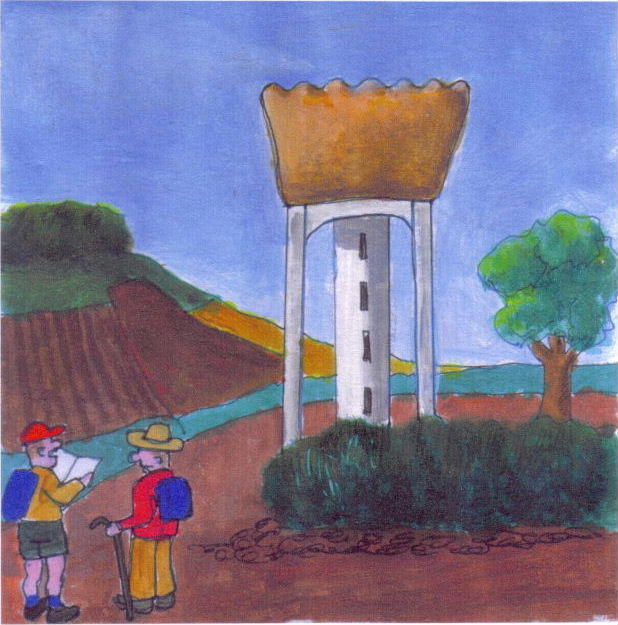
Following the successful campaign to get Melton Mowbray pies "Protected Geographical Indication" (PGI) status, the town is now to follow the Americans with a themed water tower. Inspired by the Peachoid water tower at Gaffney, they wanted a pork pie water tower! The design is quite traditional up to the tank: the supporting legs will be constructed off site - and then erected, while the service shaft will be cast in sections and then craned into position. Shuttering will then be placed upon the shaft and legs, before the hot-water concrete is poured - believed to be the first time this new waterproof hot-water concrete has been used for a water tower. Innovation does not stop there: Due to increasingly cold winters, the ever present risk of the water freezing has been reduced by floating a "Jelly" like blanket on the surface of the water. Not only does this provide an insulating layer, retaining heat, it also provides a sterile barrier between the treated water and air. The consulting engineers, Ebenezer Associates, have provided an artist’s impression:
© Copyright 2010, Ebenezer Associates

Sunday, 7 February 2010

Tower of Bubble

Water towers are pretty simple right? A tank supplied by gravity or a pump, so what possibly could go wrong? Cornishman Denzil Bark relates...

Cornishman in Africa : Tower of Bubble.


Tuesday, 2 February 2010

Merchandise!

1/12/11 We're very sorry but all the BWTAS merchandise has now sold out. If we get 20 people to reserve the next edition, we can put another batch in production.


This is the official and extremely limited edition BWTAS mug.


Concrete conversion in Cambridgeshire


Seen in the Cambs Times*

Historic Disused Water Tower In Fenland Village Could Be Converted To Luxury 3 Bed Home
13:39 - 01 February 2010
Disused water tower at Welney
By John Elworthy

AN historic Fenland landmark - a disused concrete and steel water tower in the centre of Welney- could become a luxury three bedroom house.

The tower, built in the 1930s, has been bought by a businessman from Girton who paid £11,750 for it at an auction last year- more than double the expected sale price.

Stephen Drury, of GSM Ltd, has applied to West Norfolk Council for permission to convert the tower which he says has "clearly become an eyesore due to its dilapidated condition".

Artist
Artist's impression of the proposed elevations of water tower at Welney
But he says the tower, decommissioned in the mid 1990s, "is an historical piece of concrete work with significance" and he says water towers do not seem to attract the same hostility as radio masts, pylons and wind turbines.

Mr Drury says the overall design rationale "is one of honest conversion and correct choice of materials. Internal planning accepts the segmental nature of the space and uses its convenient module to produce internal spaces that work well".

The external framework will remain unaltered which ensures "the conversion doesn't simply mask the building and allows others to identify with its past use."

The existing concrete legs of the tower will remain visible and the emphasis will be to produce a design that has "a light and open feel to the area below the tank".

Mr Drury says the upper level will retain the concrete hand railing system as an historical note, and the level will be capped with a weathered zinc roof and cedar cladding to the walls.

"Positive feedback has been received from English Heritage on the proposal," he says.

On the ground floor will be a cloak room; n open plan kitchen and dining room on the first floor with a first floor mezzanine lounge; a second floor of shower room, bedroom, and the main bedroom at tank level. On the upper level will be a family room and terrace. 

BWTAS comment:

No doubt this proposal conversion has taken a leaf from the home of Jan Moreels and his much admired conversion of a concrete tower outside Antwerp. 

--

*note: we have pasted the content of the Cambs Times here in its entirety because of the increasing frequency that links become broken when newspapers do not keep their stories online for more than a few months. If you are the copyright holder and you object to this "fair use" please contact BWTAS and it will be removed. Nat Bocking, Gen. Sec. BWTAS.

Wednesday, 13 January 2010

No business like snow business...


The freeze that has gripped Britain has dominated the media for the last four weeks and so can't be ignored by BWTAS. Our chairman Wil Harvey kindly sent in this winter scene from Southwold.


The practical problems of freezing are a concern to water tower engineers. Usually, such a large mass of water doesn't freeze entirely and the outlets are under the surface of any ice formed but on older towers with pumping engines underneath them, the designers would vent the smokestack or provide bleed pipes through the tank to utilise waste heat to prevent freezing, the Round House in Perth being an example. The main problem is the freezing of the pipework and this is why most towers that are supported on legged structures will have a central column enclosing the pipes and the stairway, as evident above.


Water tower volunteer killed by train


BWTAS expresses its sympathies to the friends and family of Mr Graves who although unknown to us was apparently a dedicated volunteer at Carlshalton Water Tower:


Croydon Guardian


Commuter killed after falling in front of train at Carshalton Beeches station


By Julia Kennard


A man killed in a freak accident may have been suffering from an epileptic fit when he collapsed on train tracks and was struck by a high-speed service. Philip Graves, 52, from Carshalton, died after being hit by the train on Sunday January 3 at 8.18pm at Carshalton Beeches station.
Mr Graves, who worked at Croydon Land Registry, had suffered from epilepsy according to his work colleagues and is believed to have been having from a fit when he was struck by the 8.09pm Sutton to Streatham Southern service.
A witness, who did not want to be named, was collecting train tickets from outside the station when he heard the impact of the collision.
He said: “A young lad came running up the side steps saying he thought someone had been hit by the train.
“I ran down and I guess naively, in the heat of the moment, expected to see someone injured, with a broken arm perhaps, or that just needed some help.
“The boy saw the next train was not due for 20 minutes, so he dialled 999, but the fast train came through within seconds.
“You couldn’t have much worse luck; to have a fit on a station and then fall onto the tracks, it was a tragic accident."
Neighbours of Mr Graves said he used to volunteer with the Royal British Legion and help raise funds for the upkeep of Carshalton Water Tower, a Grade II listed early 18th century garden building.
His father Stanley died last year; his mother Joan is in a nursing home and his sister is believed to live in Southampton.
Retired Jack and Jeanette Short, who lived next door to Mr Graves, said he would be missed.
Mr Short, 65, said: “He was involved in the poppy collection for the British Legion as his father also used to take an active interest - he was a former Red Cap with the Royal Military Police.
“His mother also used to be chairwoman of the local branch.”
Carshalton Water Tower secretary Julia Gertz said Mr Graves was a “valuable asset and quite a character” and would be “greatly missed.”
Terry McHale, line manager at Croydon Land Registry facilities department, said Mr Graves had worked for the Registry for about 25 years and was well-liked among his many colleagues.
He said: “He was one of the millions of people that don’t get noticed, but was a dilligent worker, who performed his duties quite religiously. He was an ordinary person, but one that just got on with it, did not make a fuss and did a thorough job.
“His death has been a big shock, particularly given the circumstances of his life.”
Police are not treating his death as suspicious.
A file is being prepared for the coroner.
Did you know Mr Graves? Leave a tribute by calling Julia Kennard on 0208 330 9541 or email jkennard@london.newsquest.co.uk

Wednesday, 6 January 2010

Soup to nuts

A breaking news story:


The Lynn News reports that English Heritage (the quango with the most clout in these matters) has decided not to list the Campbell's soup tower (a water tower) that has dominated the skyline for fifty years in the town and is a object of local affection, as water towers often are. This paves the way for site developer Tesco to demolish it.


While BWTAS takes a neutral stance on preservation issues, it does take issue with the criteria used to determine "architectural merit" as all the studies of water towers we've seen published, including those by English Heritage, say knowledge of the subject is scant, which of course is our raison d'être. 


According to the paper's letters page, there's no shortage of support for the tower and even some serious proposals for alternative use, such as a climbing wall facility, which other water towers have been successfully converted to.


If you want to raise a stink, perhaps start with contacting the Lynn News news desk; newsdesk@lynnnews.co.uk or leave a comment on their Facebook site or here. Even better, write to your MP and ask them to ask the Secretary of State for Culture to reconsider.


Campbell's Tower will be demolished


Campbell's Tower - doomed


Published Date: 06 January 2010
THE last ditch bid to save the landmark Campbell's Tower at Lynn has crumbled.
English Heritage and the Secretary of State for Culture have decided against granting listed status to the tower, leaving the site's new owners, Tesco, free to demolish it and change the town's skyline forever.

Lynn Civic Society admits it is disappointed by the ruling but has said that it wants to work with the supermarket giant to make sure the history of the soup factory and tower is catalogued and features in the new development.

The bid to save the 50-year-old tower was backed by conservationists and by Lynn readers who took part in an on-line poll. But this week English Heritage decided it is not important enough to save.

It said in a statement: "While we are sensitive that there is a lot of local affection for the former soup factory, and especially the water tower, our role is to objectively assess the claims made for listing.
We must do this in the context of its national significance and special historical and architectural interest.

"Unfortunately, this building does not merit adding to the list."

Elizabeth James, the Civic Society member who masterminded the listing application, said: "Yes, we are disappointed. We didn't know whether or not we would be successful but thought we should at least make the attempt.

"The warm response of the public to the publicity had made clear the affection in which the tower is held and which, indeed, is recognised by EH's own researchers.

"Its report is certainly not unsympathetic to the building and agrees that the tower is undoubtedly of local significance. But too many other elements militated against listing."

She said that Tesco's corporate affairs manager and planning adviser Nick Gellatly has agreed to display historical information about the tower in a new building and would like to hear from people who worked on the factory during its construction so that reminiscences can be compiled and kept.

He has asked to meet the Civic Society again early in the New Year.


Monday, 4 January 2010

Clifton water tower hunt

updated 6/7/10 (see bottom of page).


Over the last few days the wires at BWTAS have been humming. After coming across this 1994 online newspaper article (which had stripped out the relevant images) about a tower near Clifton in Somerset, some members have been trying to locate an image of it but it has been elusive. This is nothing new to water tower hunters but this time we thought we'd do a bit of crowd-sourcing and see if anyone can help us locate an image via this blog.

It's not this observatory, often misidentified as a water tower, near the Clifton bridge.


It's not this 1957 concrete water tower also in sight of the bridge on Stoke Road (via Geograph).


It's not the 1905 Knowle Water Tower in Jubilee Road in Bristol which is close to the Cadburys factory (via Clare Johnson).


It's very like to be this tower located on the corner of St. Mary's Road and Church Road in Leigh Wood but we'd really like a street level photo to properly match the description (via Bing).

Can anyone help us locate a better image and whatever became of the water tower's owner Mr. West in the end?

If you have an image of this tower, please send us a link via the comments page.


THE INDEPENDENT Thursday, 12 May 1994

HARRY WEST has always had an eye for nice old buildings that other people have finished with and want to pull down. Years ago, as director of the Greater London Arts Association, he showed local authorities how to convert banana warehouses into film studios.

In 1976, newly-retired as a recreational teacher, the wartime Hurricane fighter pilot saw a 47ft- tall castellated Victorian water tower for sale in Leigh Woods, Bristol.

The stone tower, with its commanding views, had been built in 1868, four years after Brunel's Clifton suspension bridge crossing the nearby Avon Gorge. Its owners, the Bristol Waterworks Company, had put it on the market with planning permission for demolition and replacement by a block of flats.

'I told them knocking it down would be a crime against humanity,' Mr West said.

The building was not listed, but even though Woodspring District Council tried to do so, there was little enthusiasm at the time for preserving industrial architecture and the Department of the Environment ruled that it was of local, not national, interest.

Mr West said: 'In fact it was one of the first towers of its kind in Britain. It was built to provide water for the Cadburys and Wills and their retainers, including two gigantic family Victorian houses for the Wills. So it's in this exclusive gentlemen's residential area and as water towers go, it's posh.'

Mr West sank his life savings into a five-room conversion job that respected the old tower's history. He removed 35 tons of stone by hand to create windows for living rooms, bathrooms and a big third-floor guest room.

'I tried to keep the concept of a tower so you walk through the front door and up the building with open-plan stairs,' he said.

'I retained all the industrial features like the 30ft pipe which delivered water to the people of Leigh Woods and is now a chimney for my wood-burning stove.'

The original 25ft-square water tank, built by Bristol Wagon Works in 1867 and weighing 300 tons when full, is still in place surrounded by a gallery.

Now aged 72, and with his eyesight failing, Mr West has decided the time has come to pass on his personal act of conservation to a younger generation.

After 22 years inside the tower's 4ft-thick walls, he has put the old tower on the market for offers in excess of £245,000.

Suffering from glaucoma and soon no longer able to drive, he wants to move to Bristol to be able to continue his latest career as a teacher of ballroom dancing.

'I've got to move on, to do new things as I've always done, to travel,' he said. 'But I'll miss the old tower. It's got my heart and soul in it now.'


6/7/10 update


Bingo! 

Thanks to Wilco Krul of the Netherlands who was holidaying in England, we now have an image of the tower in Leigh Woods. Thank you Mr Krul. The 'crowd sourcing' experiment is declared a success.

Monday, 28 December 2009

Landmark Lendal Tower up for sale


The Lendal Tower in the city of York is up for sale. Previously described in this blog, according to the Yorkshire Post the 700 year old tower is on the market for £650,000 in a distress sale of the assets of colourful property speculator David Hattersley.


The particulars available from Carter Jonas include the tower and several buildings and cottages.


From the Yorkshire Post:

Seven hundred years of history

Lendal Tower has stood next to the River Ouse since about 1300. It was built to help defend the city and housed a great iron chain that could be pulled across the river to the Barker Tower opposite. This gave protection in times of trouble and enabled tolls to be levied on river traffic. In 1677, the tower was leased for 500 years to the York Waterworks company established by Henry Whistler. It became the city's first waterworks with a horse- powered pump supplying the water via pipes made from hollowed out tree trunks.


After Mr Whistler died the concern was sold to Col William Thornton of Cattal and later to Jerome Dring in 1779 for £7,000 with shares held by John Smeaton, designer of the Eddystone Lighthouse. Mr Smeaton helped improve the steam engine at the waterworks, which in 1836 was given its own dedicated engine house. Lendal Tower's tank was also removed in the mid-1800s lowering the building by 10ft, and railway architect George Townsend Andrews added the medieval, crenellated roof. It was then used as stores and offices for the waterworks company that eventually became part of Yorkshire Water.

Wednesday, 23 December 2009

Stanbridge Road, Leighton Buzzard (1896)


This photograph of the Victorian water tower, that stood to the south of Stanbridge Road, at about SP 935 247, was kindly sent to me by Bedford Borough Council after I found details of this tower on their web site. The tower was about a hundred feet high and was demolished in the 1950's. The official guide to Leighton Buzzard of 1910 noted: "The council are the owners of the waterworks and provide a constant supply of pure and wholesome water, which is provided free of cost for domestic purposes. The water is obtained from a well over 200 feet deep, bored into the lower greensand, and is capable of yielding a supply of 164,000 gallons per day. The latest analysis made by an eminent public analyst states that the water is "simply perfect" and "is excellent water for public supply"".

There was another water tower about about 400 feet away, to the east at RAF Stanbridge. This too has beeen taken down. If anyone has any further information on either tower, please leave a comment.