Latest Tweet

Wednesday, 25 September 2013

Museums about water supply in the UK

By Brian Light


Hereford Waterworks © Brian Light
Ever since my first interest in Jumbo I have also been interested in museums which declare that at least part of their remit is to tell the historical development and/or current technology of water supply. 

One of the very few such examples is the Sutton Poyntz water museum in Dorset, which is run by Wessex Water. Years ago I corresponded with the man who for all I know still runs it, John Willows. However it is open only for group educational visits. 

Several restored pumping stations do this as a minor by-product of their main appeal, which is usually the main pumping engine(s), sometimes in steam, and the building in which it is housed. Such museums tend to diversify into related displays of vintage technology, a classic local example being the Museum of Power at Langford, with its massive Littleshall triple expansion engine. This was the pumping station that until 1960 supplied Southend with 8 million gallons of water daily from the River Blackwater.

On a recent camper trip I was therefore determined to visit the Hereford Waterworks Museum, which declares itself to be 'The working museum which makes the story of drinking water spring to life'.

These displays are the most complete and coherent attempt I have seen to relate the story of water supply, and yet they occupy only a minor proportion of the total space, most of which is taken up with working examples of various types of engines. I wondered about this and got talking to several of the volunteers. The tendency is with these kind of museums is that people offer old engines which have been mouldering away in their sheds and garages, and the volunteer engineers, to whom such things appeal, duly restore them and add them to the displays, effectively diluting the original aims of the museum.

Old machinery in operation has an obvious appeal to the technically minded, but also more generally a kind of hypnotic attraction. Most of us have probably been to those steam rallies at which rows of old pumping engines splutter away amid clouds of steam. One can see how the declared aim of the Hereford museum has been somewhat overtaken by the display of various types and make of internal and external combustion engine.

As a result of this incomplete research, my broad conclusion us that no museum as yet exists in the UK which attempts to portray and combine the following:

The technical development of modern water supply in Britain (and more briefly, globally)
The social history of this development – obtaining water in everyday life; the effects of poor sanitation; the epidemics of waterborne diseases etc

The book King Cholera describes the horror of that disease - it would be difficult to imagine a worse way to die, yet scores of thousands in Britain alone did, until modern water supply stepped in to banish it.

Scores of huge restored mansions can be visited which relate the wealth, influence and power of individual families, but little of a huge Victorian development that transformed the lives of virtually the entire population. There are of course books on the subject, especially Persian, Greek and Roman developments in water supply (and the political power that went with controlling it). There are a good scattering of restored pumping stations, all of which probably say something about water supply in their local area. But none of this remotely gives justice to the big story.

This is leaving aside the growing global challenge of the world's future water supply and the increasing likelihood of conflict over water resources. Popular interest in the subject of water supply in the future as well as the past is likely to grow.

Tuesday, 24 September 2013

The £64,000 question...

From The York Press http://www.yorkpress.co.uk of 25th September 2013


http://www.eddisons.com
A water tower next to the A64 in York has been sold at auction for £64,000 – more than double the highest amount it was expected to fetch.

The Yorkshire Water structure at Askham Bryan went under the hammer at Leeds United FC’s Elland Road ground (on 18th September) at a sale handled by auctioneers Eddisons. Its guide price was between £20,000 and £25,000.

The water tower, in Mill Lane, is currently let to Vodafone and TV York, which pay combined annual rent of almost £12,500 for the use of buildings at the site, and the firms must give six and three months’ notice respectively if they want to leave.

According to a post on the urban exploration site 28 Days Later, the now disused tower had about 1 million litres capacity and is 30 metres high. It was photographed inside with permission. It appears to be a ferro-concrete open legged type of the Mouchel pattern.

http://www.28dayslater.co.uk/forums/other-sites/61485-water-tower-york.html

The question is naturally, what will the owner do with it now? The sale was only the tower and no surrounding buildings or land so making redevelopment unlikely. Should we Askham Bryan?


Sunday, 15 September 2013

Lots to see at Tiptree...

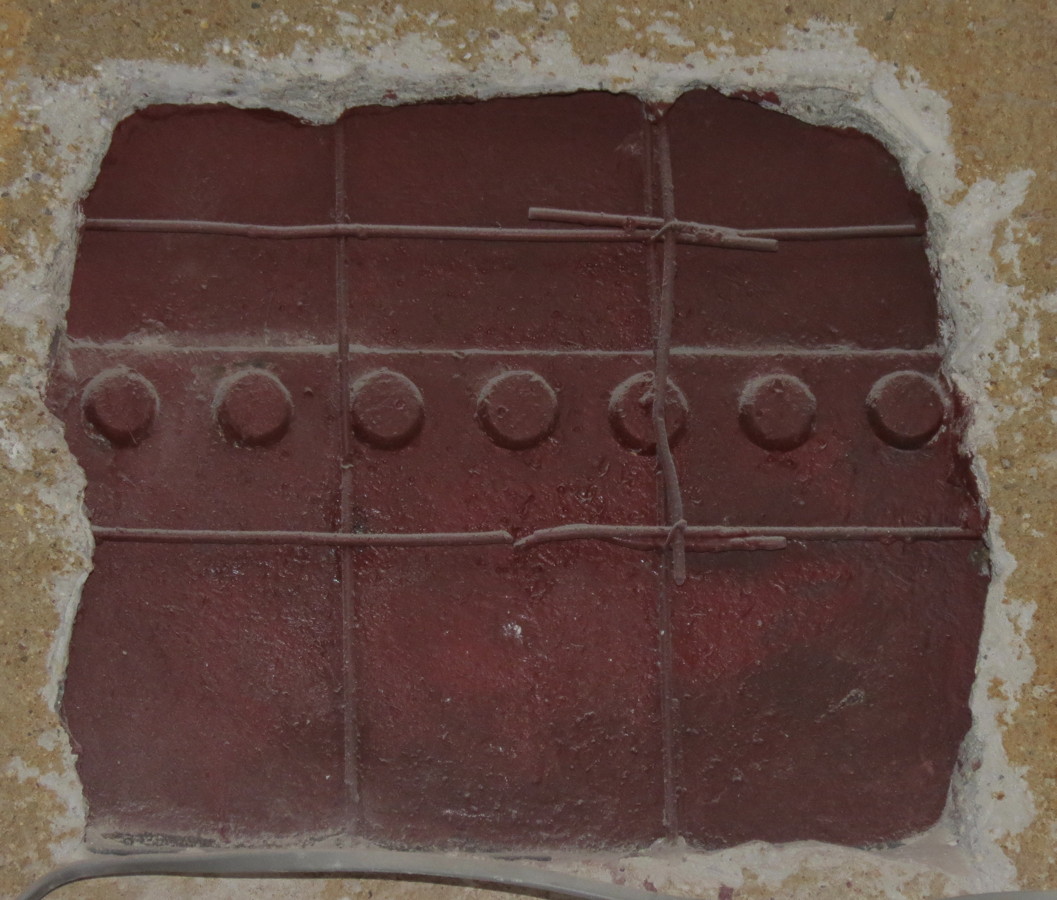
The few BWTAS members that made the effort to visit the Tiptree water tower last month, were well rewarded. While the tower is well on it's way to becoming a dwelling, this is not going to be yet another home that has just had a previous use. This is a water tower, and the conversion to a dwelling is a celebration of this, with much being done to preserve as much as possible. Obviously the vertical ladders have had to be replaced with a staircase, but this is a steel staircase, in keeping with the industrial nature of the building. In fact, much of the conversion is dictated by current building regulations for a dwelling - for example the brick walls cannot be left exposed but have to be insulated and plastered. The large water pipes either side of the door, together with their huge valve gear by BLAKEBOROUGH, are being retained. As we ascended the tower we came upon more retained pipework - the overflow and washout pipes. The tank was unusual in that rather than having two equal compartments of 50% capacity, only the lower portion of the tank was partitioned - hence the single overflow. It must have meant that drain down was done during periods of low consumption, if supply was to be maintained. Girders showing the makers name, Frodingham Iron & Steel Co. Ltd. added to the history of this building, as we head up towards the tank. On the floor beneath the tank are portions of the riveted steel access shaft, that once past through the centre of the tank. This has the Scottish steel company, Colville's mark on it.

When we reached the tank, we learnt that in the late 1950's or early 1960's the tank began to leak and the remedial action was to weld a wire mesh to the tank, to enable gunite to be sprayed on, to form a waterproof coating. Up here in the "loft" where regulations are not so harsh, a feature has been made by removing some of the concrete to expose the mesh and the original tank wall. This was not the only time there was a loss of water - in April 2003, telemetry failure caused the tank to overflow and water pooled just yards from an electricity sub-station! Fire crew had to pump the water away.

A very interesting visit, a big thank you to Jim Underwood for allowing BWTAS to visit his tower and to Graham Brewer for taking time out to show us around.

Ferrers

Wednesday, 14 August 2013

Stunning Water Tower Photographs - to go on display in Norwich

© Copyright Carys O'Brien

As part of the Festival of Architecture in Norwich & Norfolk (FANN13), three photographers will be exhibiting new work, exploring architecture in the Norfolk landscape. Carys O'Brien's contribution will be on Water Towers - judging by the photograph above, of the 500,000 gallon tower at Horstead, it should be well worth a look. The exhibition runs from Thursday 17th to Sunday 20th October 2013 at Nunn's Yard, 31 St. Augustines Street, Norwich, NR3 3BY and Yallops, 59 St. Augustine's Street, Norwich, NR3 3BG. More information on this display and the background of the three photographers may be found here.

Ferrers

Saturday, 27 July 2013

Tiptree, Essex (1933)

A chance for BWTAS members to visit...


The 1933 octagonal brick tower at Tiptree, is one of the later brick water towers. Located to the North of Tiptree at TL 88643 17147, it housed a cylindrical riveted steel tank with a central access shaft. However, the tower no longer required by Anglian Water, is now being converted to a dwelling. With conversion 80% complete, there is an opportunity for BWTAS members to take a look inside this tower. The owner has kindly arranged access for 11:30 a.m. on Saturday, 17th August. Places are limited, and places must be booked, by contacting bwtas@hotmail.co.uk

Following the visit, it is proposed that we then adjourn to the Wilkin & Sons Ltd. Tea Room, just over a mile away, to catch up and chat water towers etc. There is also a museum and visitor centre there.

Note: The tower conversion is a work-in-progress and you visit entirely at your own risk. The owner or BWTAS cannot be held responsible for any accidents on this building site.

Tiptree water tower is on the B1023, Kelvedon Road, just north of Tiptree - a map may be found here. For those with Sat-Nav, the post code is: CO5 0LX. Parking may be found on the industrial area by the tower, as you head out of Tiptree, take the road just past the tower on the same side.

Ferrers

Note to members:

You should have received an e-mail notification of this visit. If you did not, it's either in your Spam, or we do not hold a current e-mail address for you. If the latter, please e-mail us at bwtas@hotmail.co.uk regardless of whether you intend to come on this visit, so we can update our list and keep you informed.

Saturday, 6 April 2013

Jumbo Information Panel Unveiled...


About 50 people congregated by Jumbo, to see Colchester's MP, Sir Bob Russell unveil the interpretation panel that the Balkerne Tower Trust had erected, on the Council landscaped area next to the tower. For the first time ever, the thousands of people who pass by will now be able to read about this magnificent building.

Below is a YouTube video of the event, further images and details of the support for this panel may be found here.

Monday, 1 April 2013

Jumbo shows his feet again!

When Nat Bocking was interviewed by Chris Wilson, for BBC Radio 4's programme, "Saturday Live" outside Jumbo in Colchester, the tower was masked by horrible hoardings. This eyesore not only masked the view of Jumbo, but the vandalism taking place behind. After a long legal battle, the hoardings that should have been removed by August 2007, finally came down a few days ago. Click on the pictures for a larger view of these Grade II* feet.

Images © Brian Light.             South elevation                                             Front, West elevation

Sunday, 31 March 2013

BBC News Water Week


In July 2002 the BBC News broadcast a series of programmes about water and its importance to society. It included several short films of which two featured water towers.

BBC Water Week, it said, was the biggest examination of the water industry ever done by a broadcaster. It looked at how water and sewerage companies in the UK have been measuring up and in what way consumers and the environment have benefited or suffered as a result.

Some of the films were very critical, rightly so, of several aspects of the water supply. 
The film 'The Profits Pump' examined the tricks of the trade used by some water companies to boost returns to shareholders at customers' expense. 

Others examined the rich architectural and engineering heritage of water supply, waste treatment and water towers. Historian Richard Gill of the Victorian Society took viewers around Luton's magnificent but derelict Bailey Hill Water Tower which has since been converted into a luxurious home.


The films are archived in Real Player format, they're very lo-fi but watchable. BWTAS suggests watching them as they're very good but also, if they get enough traffic, the BBC will be encouraged to maintain access to them.


Sunday, 24 February 2013

A Right to Be Clean: Sanitation and the Rise of New York City’s Water Towers


30th Street, between 7th and 8th, 2012.
During the morning rush hour in New York City, tourists stand out as being the ones looking up. It’s possible that they see more clearly what most New Yorkers take for granted: water towers. Those archaic looking wooden structures that grace the rooftops of almost every New York City building play an integral, though often overlooked, part of watering this urban center.

Read More

Monday, 18 February 2013

Raydon gets a new Roof !

The water tower at Raydon, Suffolk, recently received a new 2.7 tonne, aluminium roof, as part of an £800,000 refurbishment. The refreshing aspect of this refurbishment, is that on completion, it will return to use as elevated storage for potable water!

The 1954 reinforced concrete water tower, built by the then Samford District Council, had a steel roof that was no longer watertight. It is vital that the treated water stored inside the tower is protected from any possible contamination. It was decided that the best way to ensure this, was to replace the roof entirely and refurbish the whole tower at the same time. The 300,000 gallon steel tank within the concrete structure, also required its inside coating stripping off by shot-blasting and re-coating, prior to the new roof being fitted last Thursday.

The 50 foot diameter roof arrived as a kit – like a giant flat pack. Anglian Water’s contractors, @one Alliance, put it together in the carpark of the nearby golf course before hoisting it into position with a crane.

The tower, which serves 17,000 people in and around Raydon and Alton, has been out of use for about a year since it was found the old roof was deteriorating. The tower at O.S. Grid Ref. TM 04745 38111 provides storage to balance flows from the treatment works and security in the event of a failure as well as maintaining constant pressure.

Images and information kindly supplied by Anglian Water.

Ferrers